
Software that fits.
Software that fitsyour business.Not the other way round.
We build our systems around what makes your business unique. Thanks to AI, in a fraction of the time.
- FinTech & banking
- InsurTech
- e-commerce
- hospitality
- automotive
- data & AI
The challenge
Building software is a craft.Writing the brief is an art.
Almost anything can be built today. Knowing what should be built is the hard part.
So we approach every solution as a product. We talk about how the business should work, not just about what we are meant to build.
Buy or build?
Buy your operations. Build your business.
Where you do things the same way as everyone else, the standard is an advantage. Where you stand apart, there is no room for compromise.
Buy the chassis, build the rest
Part of the process is an industry standard and can be bought ready-made. What sets you apart has to be built, otherwise the difference disappears.
Not sure which side you are on? We will work it out together.
Get in touchHow we work
From a need to a working solution

- 01
We clarify your goal
Understanding your need is fundamental for us. We sit down with you and work out together what your goal is.
- 02
We show you what the system will look like
We do not need you to tell us what the solution should look like. Our examples from practice and our prototypes let you picture how it could work and what will actually help you.
- 03
We involve your team
The success of our systems depends on the people who will be working with them. That is why we like to bring your team in as early as possible.
- 04
We get it live and help you start
We help you put the system into operation, we assist through the first days of use and we give the future users all the support we can.
- 05
We run it and keep developing it
Handover is not the end for us. We are here for you during everyday use of the system and whenever you need a future change or extension.
How we know we are there
Our goal is not to deliver the brief written down at the start — that usually changes along the way. Our work is a success the moment we have helped solve your need.
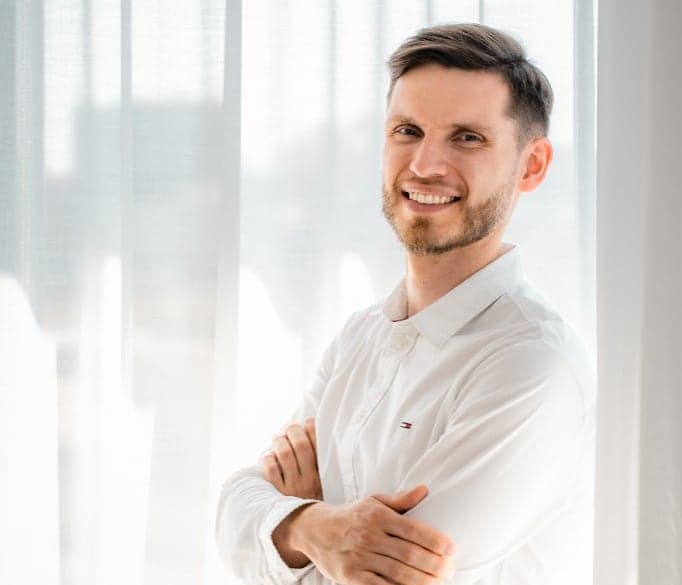
Michal Radvan
Founder & CEO
Michal Radvan is the founder and CEO of Soflexity. He has done nearly everything in IT: he wrote code, designed architecture, ran projects and product teams, and eventually whole IT departments as a director. He has worked in consulting, in corporations and in small companies — he knows both sides of the table, the supplier's and the client's.
LinkedIn profileAbout
We have speed, experience and a business mindset.
Building a quality solution used to take several roles and a long development process. Our experience and modern technology have let us shorten that path dramatically. That is where our speed comes from — and at the same time we reach far higher quality, because information no longer has to be handed from one role to the next.
I used to wait weeks for a product and end up with something other than what I wanted. Usually I had to accept it. I don't have to any more — and that is why Soflexity exists.
Experience
Companies we have worked for
Our experience is not only technical, it is above all domain experience. We have been through corporations as well as small and medium-sized companies across a wide range of industries, at home and abroad. That is why we know what matters in each field and each type of company, and we can shape our solutions around it.
7+ companies, 6+ industries, a portfolio of products and experience
Your company?
The eighth slot is open.
Soflexity Lab
We are not afraid of technical challenges.
We push the limits of what is technically possible.
Has a development team ever told you that what you want is too complex, will be unreliable or will be expensive? We take the opposite approach. We bring technology ideas and challenges of our own, ones you will love. We tear down the limits of what used not to be possible.
Lab scope
Questions
What you ask us most often

We don't think of ourselves as developers. Together with the client we build a tool that has to move their business forward — so we start with the business, not with a brief. A classic agency needs an exact specification: either it charges for writing one, or it expects it from the client. We cover both sides, product and technical. We are a partner, not a supplier.
Careers
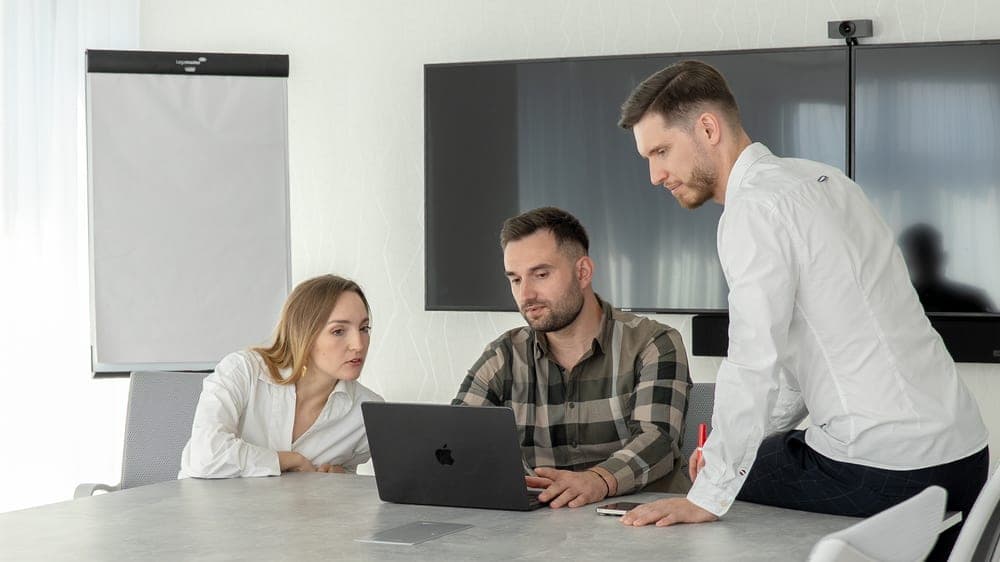
We are looking for new teammates
We look for partners with the same DNA as ours — people who enjoy business and technical challenges and know how to find a way through them. We are technology enthusiasts, but what counts for us is being able to help the client. We want someone who can work without a clear specification and without set processes. Someone who copes, speaks business and thinks technically.
Who we are looking for
A product mind, not a coder
People from product manager, product owner and business analyst roles fit in here. We have been through them ourselves.
AI as a tool, not a miracle
You know where its limits are. That a good prompt does not produce finished software.
Technically at home
Cursor, Copilot, Git and GitHub, CI/CD, Azure or AWS. The difference between local, dev and production. Code that isn't a hack job.
Self-sufficient without a brief
You solve the problem before it turns into a ticket. You don't wait for someone to tell you what to do.
We don't advertise specific roles. If you recognise yourself in the description, get in touch — the role will be shaped around what you can do.
Get in touch
Let's connect
Let's talk, with no strings attached, about what can be built today, what could help you and what you are working through in your company. We enjoy widening our own horizons and meeting interesting people.
A no-commitment online meeting
Pick a free slot. No preparation and no commitment — we will go through your problem and say whether building your own makes sense in your case. If it doesn't, we will tell you that too.
Calendar didn't load? Open the booking page in a new window